
Best Mental Wellness Apps (2026): What Actually Works
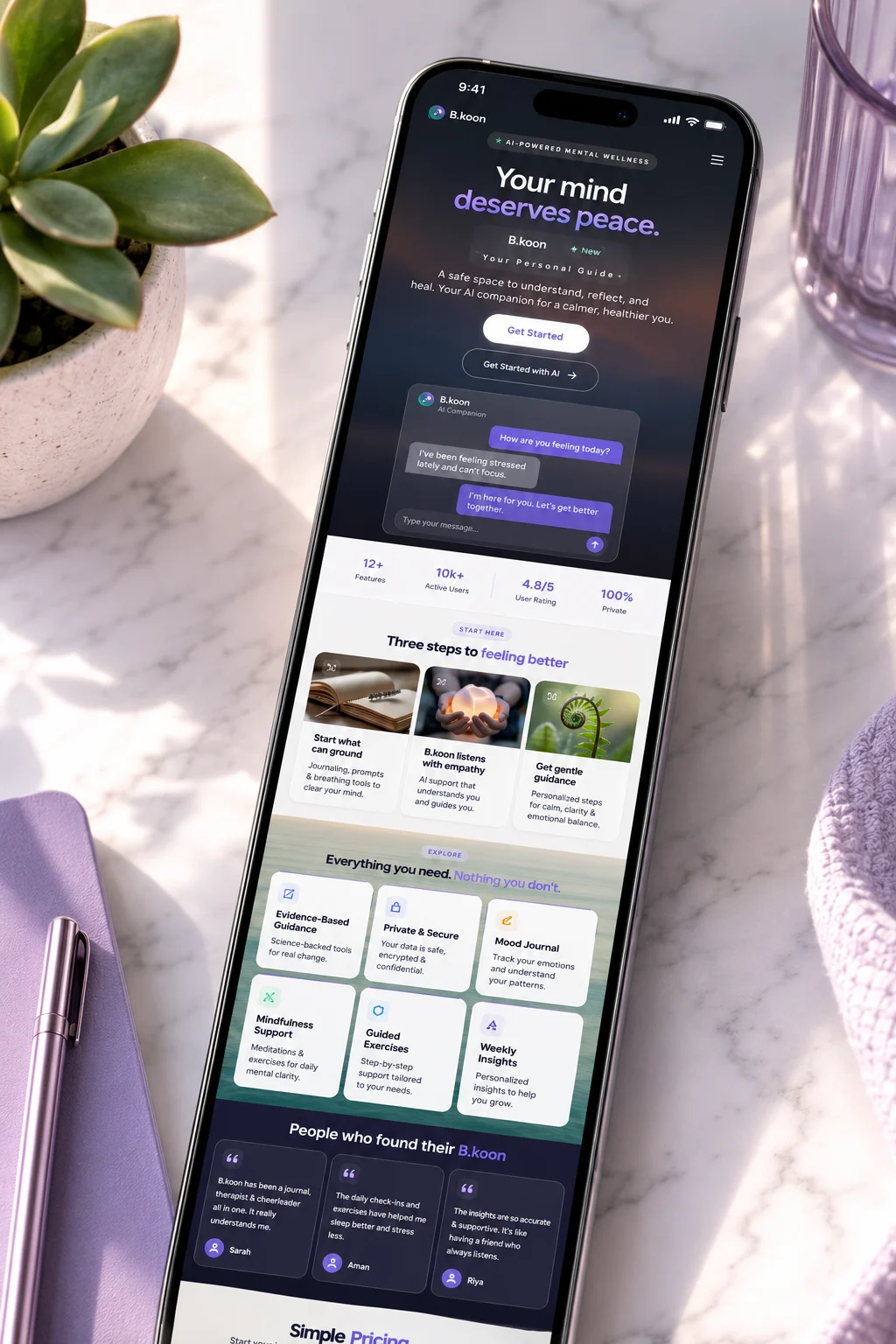
(Author Disclosure: I am the founder of Sukoon. However, this guide was written to provide an objective, transparent, and evidence-grounded comparison of the leading mental wellness tools in 2026. Every app has distinct strengths and trade-offs, and no single app fits every person.)
Finding the best mental wellness app in 2026 depends entirely on what your nervous system needs at a specific moment. While guided meditation libraries excel at preventative maintenance, interactive conversational companions offer immediate, real-time grounding during acute emotional distress.
According to data from the World Health Organization (WHO), nearly one billion people globally navigate mental health challenges, yet over 70% lack timely access to licensed clinical care. Digital mental wellness tools cannot replace professional therapy or psychiatric intervention, but evidence-based digital self-care provides a vital first-line bridge for daily emotional regulation, habit formation, and stress containment.
Below is an honest, hands-on evaluation of the 6 leading mental wellness apps in 2026, categorized by what they actually do well — and where they fall short.
Crisis Disclaimer: Mental wellness apps are intended for self-guided reflection, mindfulness, and everyday emotional regulation. They are not medical devices and do not provide clinical treatment or crisis management. If you are experiencing a mental health emergency, call or text the 988 Suicide & Crisis Lifeline (US/Canada), text HOME to 741741 (Crisis Text Line), or call 116 123 (Samaritans UK).
The 4 Archetypes of Mental Wellness Apps
Before comparing individual tools, it helps to understand that mental wellness apps generally fall into four distinct categories. Choosing the wrong category for your immediate state of mind is usually why an app feels frustrating or unhelpful.
- Mindfulness & Meditation Libraries: Audio-driven platforms featuring guided meditations, breathwork pacing, and sleep soundscapes. Excellent for building long-term emotional resilience and evening wind-downs, but difficult to use when acute panic or racing thoughts prevent sitting quietly.
- Mood & Habit Trackers: Structured logging tools that record emotional fluctuations, daily habits, and triggers over time. Great for retrospective pattern recognition, but passive in moments where you need active coping support.
- Gamified Self-Care Companions: Apps that turn daily routines — like drinking water, taking deep breaths, and writing down one good thing — into pet care or reward systems. Highly effective for motivation and ADHD-friendly task execution.
- Conversational AI Companions: Interactive tools grounded in clinical reflection frameworks (such as Cognitive Behavioral Therapy, Acceptance and Commitment Therapy, and Dialectical Behavior Therapy). They respond dynamically to your thoughts, helping you deconstruct cognitive distortions in real time.
2026 Mental Wellness Apps Comparison Matrix
| App | Primary Focus | Therapeutic Modality | Free Tier Available? | Pricing (2026) | Best For |
|---|---|---|---|---|---|
| Headspace | Guided Meditation & Mindfulness | Mindfulness-Based Stress Reduction (MBSR) | 14-day free trial | $12.99/mo or $69.99/yr | Beginners wanting structured meditation courses |
| Calm | Sleep Stories & Soundscapes | Mindfulness & Relaxation | Limited 7-day trial | $14.99/mo or $69.99/yr | Insomnia, sleep relaxation, and ambient audio |
| Wysa | AI Chatbot & CBT Exercises | Cognitive Behavioral Therapy (CBT) | Yes (core exercises free) | Free tier; Premium $79.99/yr | Structured, clinically validated CBT micro-lessons |
| Daylio | Micro-Mood & Habit Journaling | Behavioral Tracking | Yes (generous free version) | Free tier; Premium $35.99/yr | Fast mood logging without typing long paragraphs |
| Finch | Gamified Daily Self-Care | Behavioral Activation & Micro-Habits | Yes (fully usable free tier) | Free tier; Plus $39.99/yr | Gentle motivation, daily routines, and ADHD support |
| Sukoon | Real-Time Conversational Reflection | CBT, ACT & DBT Integration | Yes (20 free sessions, no CC) | Free preview; Pro $12/mo | Late-night overthinking, voice reflection & dynamic grounding |
Detailed Hands-On Reviews of the Top 6 Apps
1. Headspace: Best for Structured Mindfulness & Daily Meditation
Headspace remains the gold standard for individuals looking to build a structured meditation practice from scratch. Founded by former Buddhist monk Andy Puddicombe, the app demystifies mindfulness with friendly animations, timed sessions (3 to 20 minutes), and curated pathways for focus, grief, and workplace stress.
- What Works Well: The progression pathways ("Basics 1, 2, and 3") teach the fundamentals of noticing thoughts without judgment. The "SOS" sessions provide quick 3-minute breath resets for sudden tension.
- The Trade-Off: Headspace is largely a one-way listening experience. When your mind is racing with specific anxieties — like an argument with a partner or financial worry — listening to a pre-recorded voice can feel disconnected from your immediate reality.
- Pricing: 14-day free trial, then $12.99/month or $69.99/year.
2. Calm: Best for Sleep Stories, Evening Relaxation & Soundscapes
If your anxiety predominantly strikes at bedtime, Calm is one of the most effective tools available. Its library of "Sleep Stories" (narrated by voices like Matthew McConaughey and Stephen Fry), nature soundscapes, and gentle ambient music helps down-regulate the nervous system before sleep.
- What Works Well: Exceptional audio production. The "Daily Calm" 10-minute reflections offer thoughtful daily themes, and the music tracks curated for focus and relaxation are genuinely high quality.
- The Trade-Off: Calm offers very little structured cognitive intervention. It focuses on soothing the senses rather than helping you examine the underlying thought patterns that cause anxiety.
- Pricing: 7-day free trial, then $14.99/month or $69.99/year.
3. Wysa: Best for Structured Clinical CBT Modules
Wysa is an AI-driven pocket coach backed by extensive clinical research, including NHS evaluations and ORCHA certification. It uses an animated penguin character to guide users through structured Cognitive Behavioral Therapy (CBT) thought-reframing exercises and behavioral activation. (If you previously used scripted CBT chatbots, see our comprehensive guide on the best Woebot alternatives in 2026).
- What Works Well: High clinical credibility. Wysa's safety protocols and guided CBT toolkits (such as reframing cognitive distortions and managing health anxiety) are rigorously structured.
- The Trade-Off: The conversation often feels like moving through a scripted decision tree rather than having a natural, fluid conversation. It frequently prompts multiple-choice buttons rather than open-ended processing.
- Pricing: Generous free core tier; Wysa Premium is $79.99/year; optional licensed human coaching is available for an additional fee.
4. Daylio: Best for Fast Mood Tracking & Trigger Correlation
For people who find traditional journaling overwhelming, Daylio is an intuitive micro-diary. Instead of writing long entries, you select your mood with expressive icons and tap the activities you engaged in (work, exercise, social time, sleep quality).
- What Works Well: Takes less than 30 seconds a day. Over weeks and months, Daylio builds insightful correlation charts revealing how specific behaviors (like skipping workouts or working late) impact your emotional baseline.
- The Trade-Off: Daylio is purely descriptive. It tracks where you have been, but it does not intervene when you are currently spiraling. If you need actionable strategies in the moment, you will need a complementary tool. Read more on how to manage anxiety without therapy.
- Pricing: Free version covers basic daily logging; Premium is $35.99/year for unlimited custom icons and advanced correlation reports.
5. Finch: Best for Gamified Self-Care & Habit Building
Finch transforms self-care into a virtual pet simulator. By completing small daily wellness goals — such as drinking a glass of water, getting out of bed, or noting one thing you are grateful for — you energize your pet bird to go on daily adventures.
- What Works Well: Incredibly gentle and non-punitive. Unlike productivity apps that break streaks, Finch emphasizes self-compassion, making it a favorite among neurodivergent users and individuals managing depressive lethargy.
- The Trade-Off: The cute, gamified interface does not appeal to everyone. If you are dealing with complex emotional grief or heavy cognitive rumination, the playful aesthetic can feel misaligned with your emotional state.
- Pricing: Fully featured free version; Finch Plus is $39.99/year.
6. Sukoon: Best for Real-Time Conversational Processing & Multi-Framework Support
Sukoon was created to fill the space between static meditation recordings and retrospective mood logs: a place that actually talks back. Built on an integration of Cognitive Behavioral Therapy (CBT), Acceptance and Commitment Therapy (ACT), and Dialectical Behavior Therapy (DBT), Sukoon provides an empathetic, confidential sounding board accessible directly in the browser at any hour.
- What Works Well:
- Dynamic Conversational Flow: Rather than forcing you into rigid multiple-choice flows, Sukoon responds to what you actually type or say, helping you deconstruct specific worries in the moment.
- Multi-Framework Flexibility: Uses CBT to challenge catastrophic thoughts, ACT to foster acceptance of uncertainty, and DBT for immediate emotional regulation.
- Interactive Grounding & Voice Mode: Includes guided interactive exercises directly on the Sukoon's guided grounding exercises and full voice-to-voice conversation for when typing feels exhausting.
- Privacy by Default: Offers ephemeral sessions, AES-256 encryption at rest, and zero data monetization.
- The Trade-Off: As a newer platform, Sukoon does not yet have decades of published clinical trials like traditional academic institutions, and it is not intended as a replacement for human clinical therapy.
- Pricing: 20 free moments to explore; Pro plan is $12/month for unlimited conversations, voice mode, and weekly wellness reports. Explore options on our Pricing Page.
How We Evaluated These Apps: Our 2026 Methodology
To provide a genuinely useful comparison, each tool in this review was evaluated against four core criteria:
- Clinical & Theoretical Grounding: Does the app use verified psychological frameworks (such as CBT, ACT, DBT, or MBSR), or does it rely solely on superficial wellness aesthetic?
- Real-Time Responsiveness: How accessible is the tool during an acute emotional spike? Can you use it at 2:00 AM without an appointment or navigating complex menus? (Learn more about why your brain overthinks at night.)
- Data Privacy & Security: Does the platform sell user telemetry or advertising identifiers? Is user journaling encrypted? In mental wellness, privacy is non-negotiable.
- Pricing Transparency & Free Usability: Does the app provide meaningful free utility, or does it aggressively lock core features behind deceptive paywalls?
Which App Is Right for You?
- If your primary goal is learning to meditate and quieting a busy mind: Start with Headspace.
- If your main struggle is falling asleep or nighttime racing thoughts: Try Calm.
- If you want structured, evidence-backed CBT worksheets on your phone: Try Wysa.
- If you want to uncover behavioral patterns without writing essays: Choose Daylio.
- If you struggle with motivation, ADHD, or basic daily routines: Download Finch.
- If you need someone to talk to at 2:00 AM to untangle overthinking: Try Sukoon.
Frequently Asked Questions
Are mental wellness apps effective for anxiety and stress?
Yes, clinical research shows that evidence-based wellness apps can meaningfully reduce mild to moderate symptoms of stress and anxiety. A 2024 meta-analysis in World Psychiatry demonstrated that digital interventions utilizing Cognitive Behavioral Therapy (CBT) and mindfulness produce significant symptom reduction when used consistently. However, they are complementary self-guided tools, not replacements for clinical care in severe disorders.
Can an AI mental wellness app replace a licensed therapist?
No. An AI companion or wellness app cannot replace a licensed mental health professional. Apps cannot diagnose conditions, prescribe medications, or navigate acute psychiatric crises. They serve as daily emotional support tools, helping you practice reflection, de-escalate everyday stress, and build healthy habits between therapy sessions or when care is inaccessible.
Are conversations and mood logs in mental wellness apps private?
Privacy practices vary significantly by app. Top-tier wellness platforms like Sukoon use AES-256 encryption at rest and strict zero-data-selling policies. When choosing a wellness app, always verify that your journal entries and conversational logs are not utilized for commercial advertising or third-party tracking.
What is the best free mental wellness app?
For habit tracking and gamified self-care, Finch and Daylio provide the most generous free tiers without intrusive paywalls. For conversational support, Wysa provides free core CBT toolkits, and Sukoon offers 20 free moments to explore conversational reflection with zero credit card required.
How do I know when I need professional therapy instead of an app?
If your anxiety, depression, or emotional distress significantly impairs your ability to work, maintain relationships, sleep, or care for yourself for more than two consecutive weeks, professional support is warranted. If you experience persistent hopelessness or thoughts of self-harm, please reach out to a licensed professional or crisis helpline immediately.
Sukoon is an AI wellness companion built on CBT, ACT, and DBT frameworks. It is not a licensed medical provider or crisis service. If you are experiencing a mental health emergency, please contact professional emergency services immediately.
See how Sukoon compares — try it yourself.
20 free moments to explore private AI-guided reflection. No app download. No credit card. Cancel anytime.