
The Honest Truth About "Just Meditate" Advice
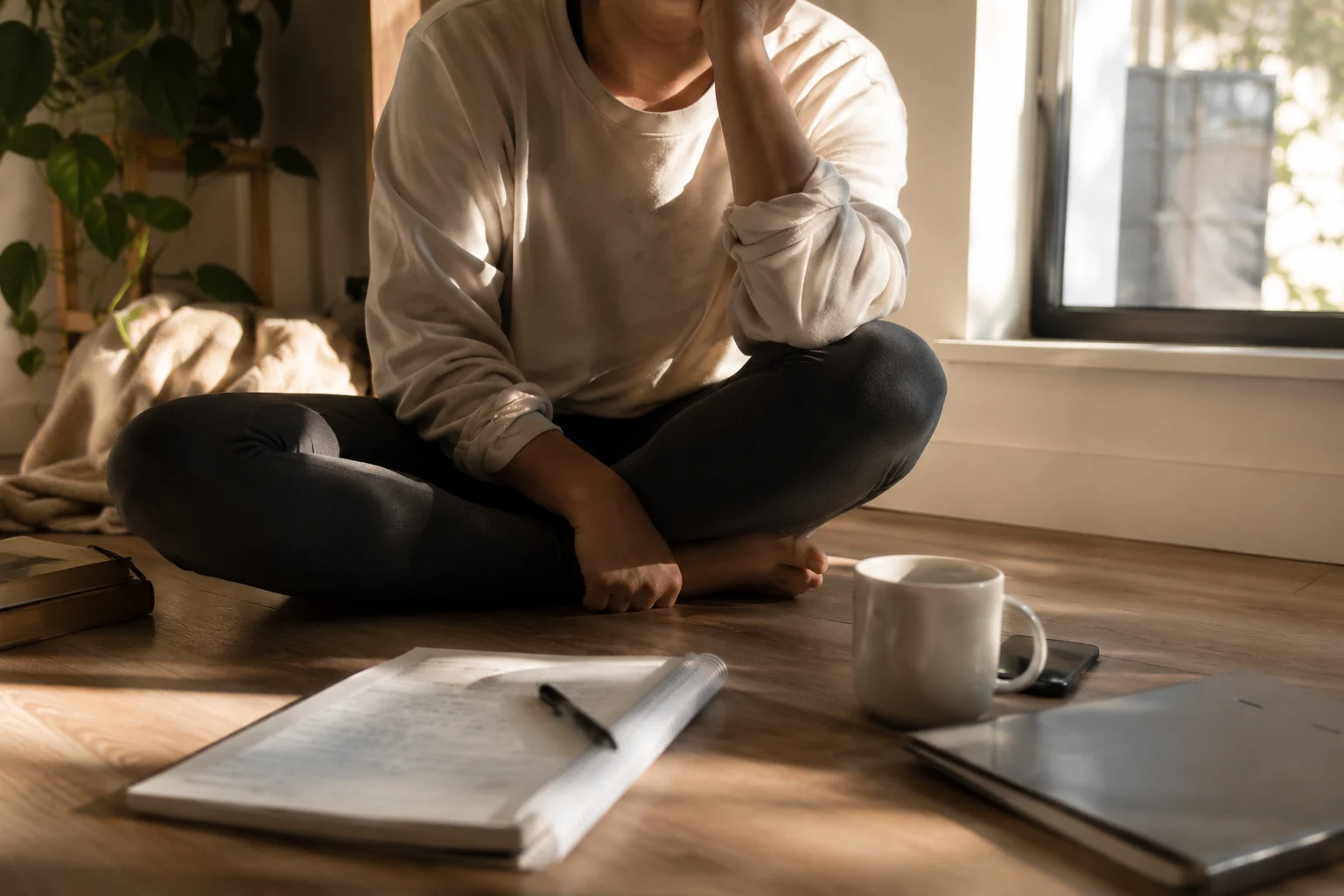
Why Quiet Meditation Backfires for Anxiety
A friend told me to try meditation when I was going through a particularly anxious stretch. She had been doing it every morning for a year and said it had changed her life. So I sat down, closed my eyes, tried to clear my mind, and within about forty seconds I was having thoughts about thoughts and then anxious about the fact that I was having thoughts, which I was pretty sure meant I was doing it wrong.
I opened my eyes. Nine minutes had passed. It felt like an hour.
If you've tried meditation for beginners with anxiety and found that it somehow made things worse, you are not broken and you are not bad at meditating. There is a completely logical reason this happens.
The Blank Page Effect
When your nervous system is in a state of heightened alert, asking it to go quiet is a bit like asking a car alarm to stop by covering it with a blanket. The underlying trigger is still there. And when you sit down in complete silence and try to empty your mind, the absence of distraction doesn't bring peace — it brings everything you were keeping at bay directly to the surface. If you struggle to sleep, try techniques for anxiety at night. For someone with anxiety, that can feel like a panic rising from nowhere.
Traditional breath-focus meditation works beautifully for a lot of people. But "a lot of people" doesn't include everyone, and for the anxious brain it often takes more preparation than anyone tells you about.
Active Grounding: Meditation for Busy Minds
What actually worked for me — and what I hear from a lot of people who gave up on meditation for beginners after a few anxious sessions — was grounding first, meditating second. Check out Sukoon's guided somatic exercises.
The 5-4-3-2-1 Grounding Method
The 5-4-3-2-1 grounding technique is exactly what it sounds like. You notice five things you can see. Four things you can touch. Three things you can hear. Two things you can smell. One thing you can taste. It sounds almost insultingly simple. But it works because it pulls your nervous system back into the present moment using your actual senses, which your brain trusts more than your thoughts.
I was sitting in my car in a parking lot once, about thirty minutes before a meeting I'd been dreading all week. Full chest-tightening, hands-slightly-wrong, can't-catch-a-full-breath anxious. I did the 5-4-3-2-1 thing, mostly because I had nothing to lose. By the time I got to the one thing I could taste, something had settled. Not completely. But enough.
Walking Meditation
Walking meditation also helped me in a way that sitting meditation never did. You walk slowly, you focus entirely on the sensation of your feet touching the ground, the movement of your arms, the air on your face. Your body has something to do. Your brain has something to track. It's meditation for beginners who need to move to regulate.
Paced Breathing Exercises
Breathing with a count is another entry point. Inhale for four counts, exhale for six. The extended exhale is the key — it signals your nervous system to downshift. You don't need silence. You can do it on the bus. In a meeting. Waiting for something to load.
Reframing the Goal of Meditation
The reframe that finally made meditation accessible to me was this: you're not trying to empty your mind. An empty mind is not the goal and has never actually been the goal. You're just learning to notice your thoughts without grabbing onto them. You notice the thought, you don't follow it. That's the whole practice. You will be bad at this for a while and that's not failure, that's the practice.
Meditation for beginners with anxiety works best when you stop trying to achieve calm and start just observing where you are. When combined with other practices as part of a holistic approach to mental wellness, it becomes a sustainable pillar of emotional resilience.
Sukoon has guided breathing built into it, which I used before I trusted myself to do it alone. guided somatic breathwork exercises if that's useful as a starting point.
What's your relationship with meditation been like? Did anyone else find the silence made it worse before it got better?
Disclaimer: This article is for informational purposes only and does not constitute professional mental health advice, diagnosis, or treatment. If you are experiencing a mental health crisis, please contact a qualified healthcare professional or call a crisis helpline.
See what this looks like in practice.
Sukoon applies CBT, ACT & DBT in real conversation — not worksheets. Try it privately, no credit card required.